
Annual Report 2025
Economic, Policy and Innovation Centre for Health Systems
A research, advisory and training institute, headquartered in Addis Ababa.
EPIC works on the parts of a health system that decide whether services reach people and keep reaching them: how care is financed, how providers are paid, how priorities are set, how medicines and vaccines move, and how evidence gets into the room where decisions are made.
The work is done with ministries, regional health bureaus, universities, multilateral agencies and research funders, and it is led from Ethiopia. Our non-resident fellows hold academic posts in Ethiopia and abroad and contribute to studies across the portfolio.
In numbers.
Financing that reaches the front line
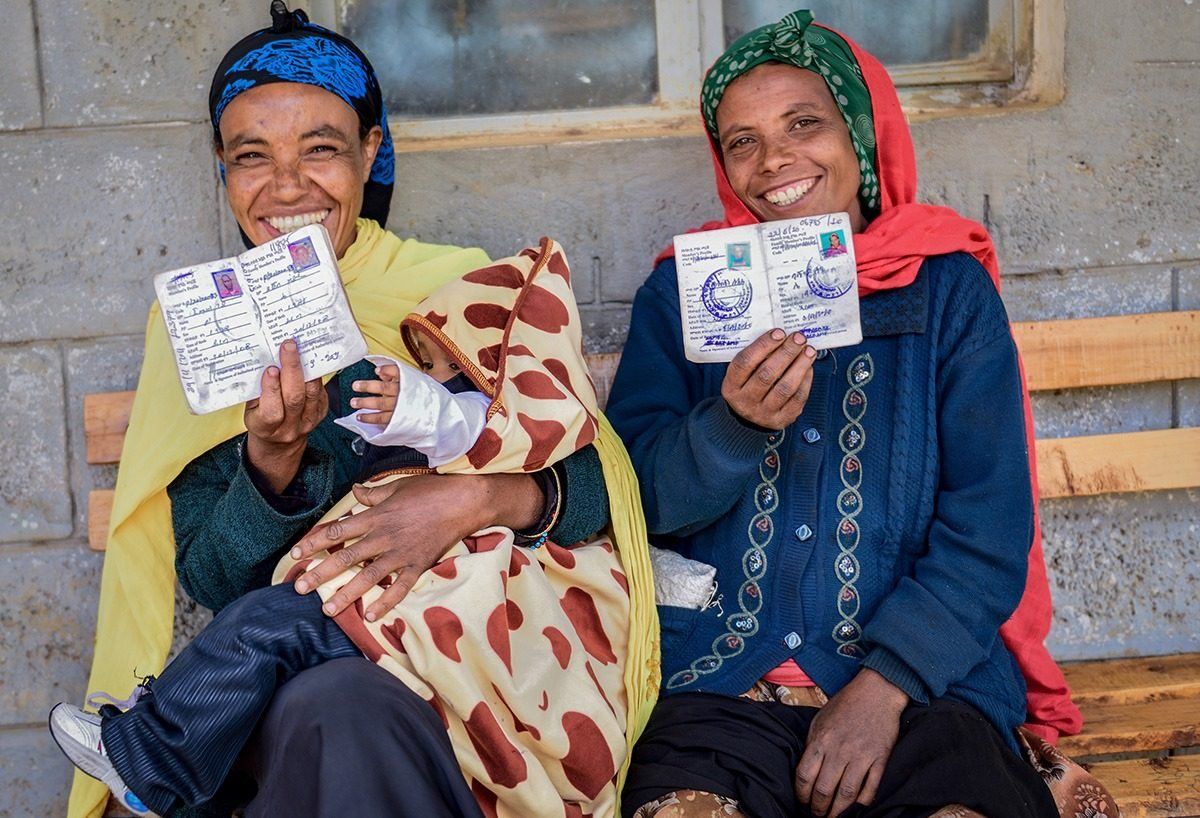
Ethiopia finances primary health care through four payment methods that were introduced separately and now operate alongside one another. Each carries its own incentives, and their combined effect has not been well documented.
Line-item budgets limit facility autonomy. Fee-for-service carries a risk of cost escalation. Community-based health insurance pays by capitation. Performance-based financing pays against verified results. After nearly a decade of parallel operation, the evidence on how these methods interact remained fragmented.
EPIC evaluated three of those arrangements together, drawing on insurance scheme performance data, routine health information records and a decade-long facility panel, alongside key informant interviews with the ministries, the insurance service and the regional health bureaus that operate them.
The first finding concerns the size of the payment. Facilities spent more on the care of enrolled members than capitation brought in, at a national utilisation rate above one hundred per cent. Regional variation is wide: some regions spent more than twice what they received, while others spent close to half. One national capitation rate produces very different results across regions.
The second finding concerns supply. Medicines and medical supplies account for most of what facilities spend capitation on. Diagnostic services were completed at a higher rate than prescribed medicines were dispensed, and higher facility spending was significantly associated with completing diagnostics but showed no association with dispensing. The pattern points to a constraint in the supply chain.
The third finding was unexpected. Capitation is expected to encourage onward referral, since the payment is fixed whatever the facility does. Capitation facilities in fact referred slightly fewer patients than fee-for-service facilities, a difference at the edge of statistical significance that may be explained by the supervision accompanying the scheme. This should be established before the model is scaled.
Alongside the evaluation, a three-region field assessment adapted an international provider payment framework to the Ethiopian context and trained a field team to collect the evidence a future payment model will require.
Higher facility spending was significantly associated with completing diagnostics, and showed no association with dispensing medicines. The 16 point gap is the evidence for a supply constraint rather than a funding one.
Reaching the people the system misses
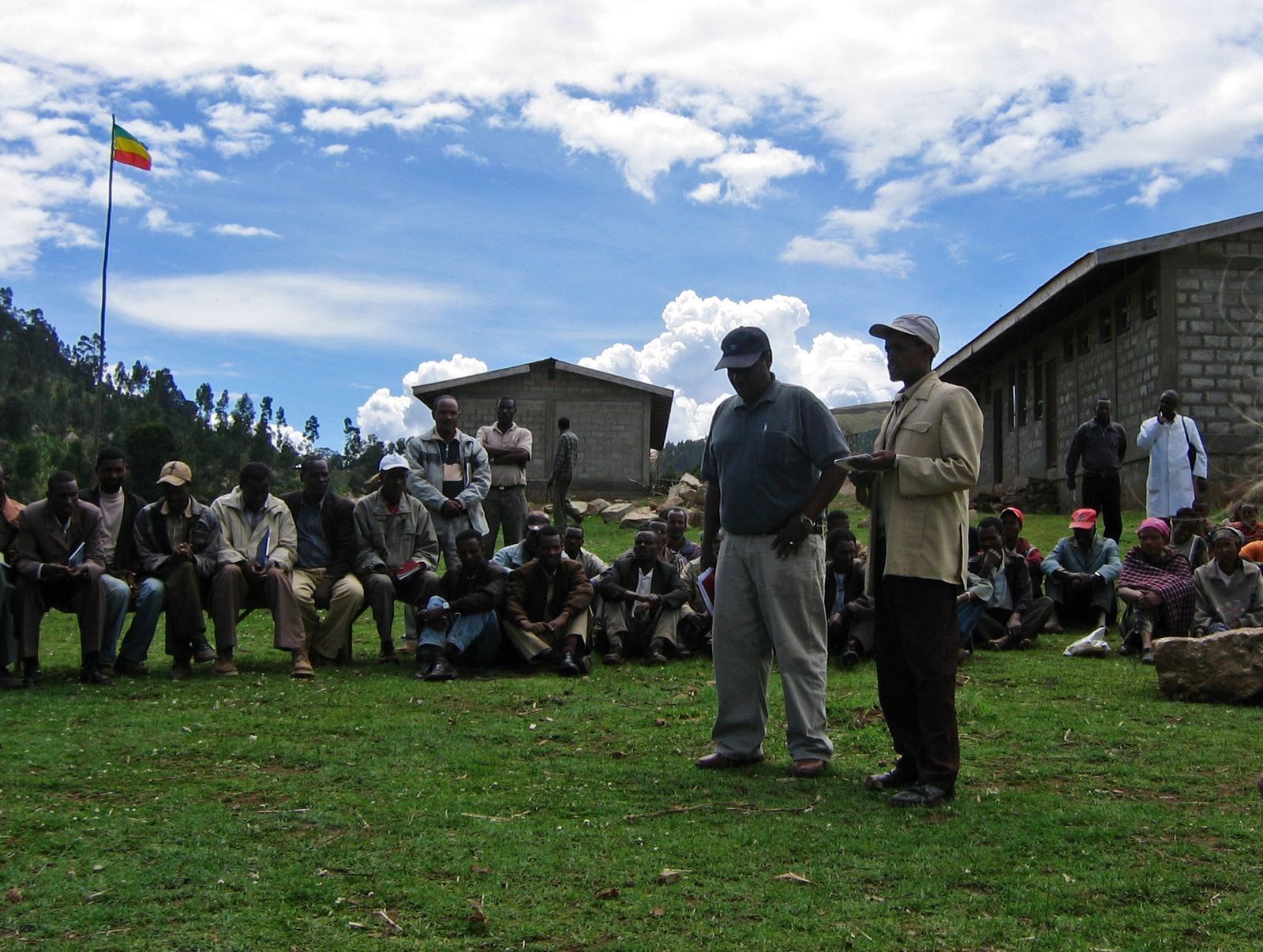
Roughly two thirds of Ethiopia’s unvaccinated children live in hard-to-reach and pastoralist communities. In Somali region, most people cannot reach a health facility within an hour’s walk.
Static services are poorly suited to a life organised around seasonal movement for water and grazing. EPIC is designing and evaluating a model that pairs mobile health teams and health extension workers with community immunisation agents, including clan and religious leaders, co-designed with the communities themselves through participatory work.
The same problem takes a different form in conflict-affected North Gondar, where damage to health and water infrastructure threatens a decade of progress against neglected tropical diseases.
Getting evidence into the room where it is decided
Tobacco taxation is among the most effective instruments available for reducing consumption and raising domestic revenue. Raising it requires sustained political work alongside the technical analysis.
EPIC modelled the fiscal and health impact of tobacco tax scenarios, then examined how the excise proclamation passed: policy documents, parliamentary debate transcripts, and interviews with stakeholders on each side. Public health advocates prevailed by challenging the industry’s cost-benefit case and by building an epistemic community across government and civil society.
EPIC’s work on health technology assessment asks the same question at the institutional level: who holds authority over priority setting, who gains and loses from reform, and whether institutions have the incentives to absorb change. That work is published in BMJ Global Health.
Evidence alone did not carry the tobacco tax. It passed because people across government and civil society trusted the same analysis and held a common position long enough for it to count.

Tools at the point of care
EPIC’s digital health work spans clinical decision support at the point of care, the measurement infrastructure on which evaluation depends, and analytics that reach planners before a budget window closes.
With Bahir Dar University, EPIC collaborates on the evaluation of an offline-first, AI-enabled clinical decision-support tool for frontline maternal and child health workers. The design constraints are set by the setting in which it runs. The tool functions without a network connection, the paper record remains the legal clinical record at all times, and no output initiates, changes or withholds care on its own. A clinician may override any recommendation without giving a reason.
EPIC develops and operates EveryCount, its own measurement infrastructure for primary data collected under field conditions. A standing panel is a cohort enrolled once, consenting to periodic re-contact, and measured across successive waves. Each participant carries a pseudonymous identifier that links responses over time; identifying information is held separately and under separate access control, and consent status is recorded against the identifier and honoured at every subsequent wave. Response and attrition are measured at each wave and reported alongside the findings.
The platform is installable. A partner institution can run EveryCount on its own infrastructure, with its own staff and under its own data governance framework, so that continued measurement depends on neither a commercial licence nor EPIC’s continued funding. The cohort is held and governed by the institution that establishes it.
The same infrastructure carries decision support for federal and regional institutions. Financing and workforce indicators are prepared so that a planner can establish, ahead of the budget window, how many posts are approved, how many are funded, and what closing the difference would cost; and what a change in payment rate would cost and which facilities it would affect. Costing and projection models are delivered in a form counterparts operate and update themselves, and outputs return to national systems through DHIS2, FHIR and OData interfaces.
Applied data science runs through the wider portfolio: predictive analytics for last-mile distribution in supply chains, data quality improvement in routine information systems, and explainable methods where a model informs a decision that affects a patient or a budget.
In tuberculosis, EPIC is co-designing a randomised trial testing whether adding metformin to standard therapy protects lung function. It would be the first such study in sub-Saharan Africa, in a population with a very different HIV, nutritional and genetic profile from the single previous trial.
A decision-support tool has to work in the conditions the clinic actually has. If it depends on a network connection, it will be unavailable at the times the clinic is busiest.
Building something that outlasts a project
Research capability held by individuals does not survive their departure. During the year EPIC built the governance, policies and systems that hold capability at the institutional level.
A governing Board with staggered terms and an Audit and Finance Committee. A policy set covering conduct, anti-bribery, safeguarding, data protection, financial integrity, labour standards and research integrity, with reporting routes that reach the Board without passing through management.
Our partnership terms carry specific commitments: an Ethiopian principal investigator with equal decision rights, first right to publish, at least half of every budget held by Ethiopian institutions, overhead at the same rate as the international partner, and no dataset sold or transferred.
Capability held by individuals leaves when they do. Most of what we built this year is procedural: posts, terms of reference, budget lines. That is the part that survives a change of funding.
What happened when traditional healers were asked to help find a disease.
In two conflict-affected districts of North Gondar, EPIC trained fourteen traditional healers, alongside health extension workers and district health managers, to recognise the signs of schistosomiasis and refer people for testing. Each referral carried a card, collected at the health centre, so that every referral could be traced to its outcome.
Four months before the intervention against four months during it. Confirmed cases rose from 29 to 74 over the same periods.
What it means
Community trust is an asset the formal system can draw on.
Interviews identified trust in healers as the reason the arrangement worked. Where people live far from a health post, the practitioner they already consult provides a route into diagnosis.
Recognition is the binding constraint.
Healers and health workers were both willing to collaborate. What was missing was formal standing for healers within the health system, and a platform on which the two groups could meet. Addressing this requires a policy decision.
The mechanism held under conflict.
The work ran in districts affected by active armed conflict, and nine of the fourteen healers trained continued to the end. A referral mechanism that operates in these conditions has practical value for other insecure settings.
The healers were willing to take part from the first conversation. What the arrangement lacked was formal standing for them within the health system, and a setting in which they and health workers could meet.
The work is done by people, in institutions.
EPIC is led from Addis Ababa by a team spanning health economics, policy analysis, epidemiology, pharmacy, data science and implementation research, with a network of non-resident fellows holding posts at universities in Ethiopia and abroad. A Board of Directors with staggered terms governs the institute, supported by an Audit and Finance Committee and an Advisory Board that provides independent technical advice.
The work is done with ministries and regional health bureaus, with universities in Gondar, Jimma and Woldia, with Amref Health Africa, Cordaid and Management Sciences for Health, and within the Joint Learning Network and the Alliance for Health Policy and Systems Research.
Work with us.
Read the full report as a PDF, or get in touch about the work.