Spatial modelling to target tuberculosis control
This project mapped where tuberculosis concentrates in Ethiopia and tested whether directing active case finding to those areas would find more cases than spreading the same effort evenly.
Challenge
Ethiopia’s TB control effort is applied broadly, while the burden is not. Programme managers had no national picture of where risk is highest.
Approach
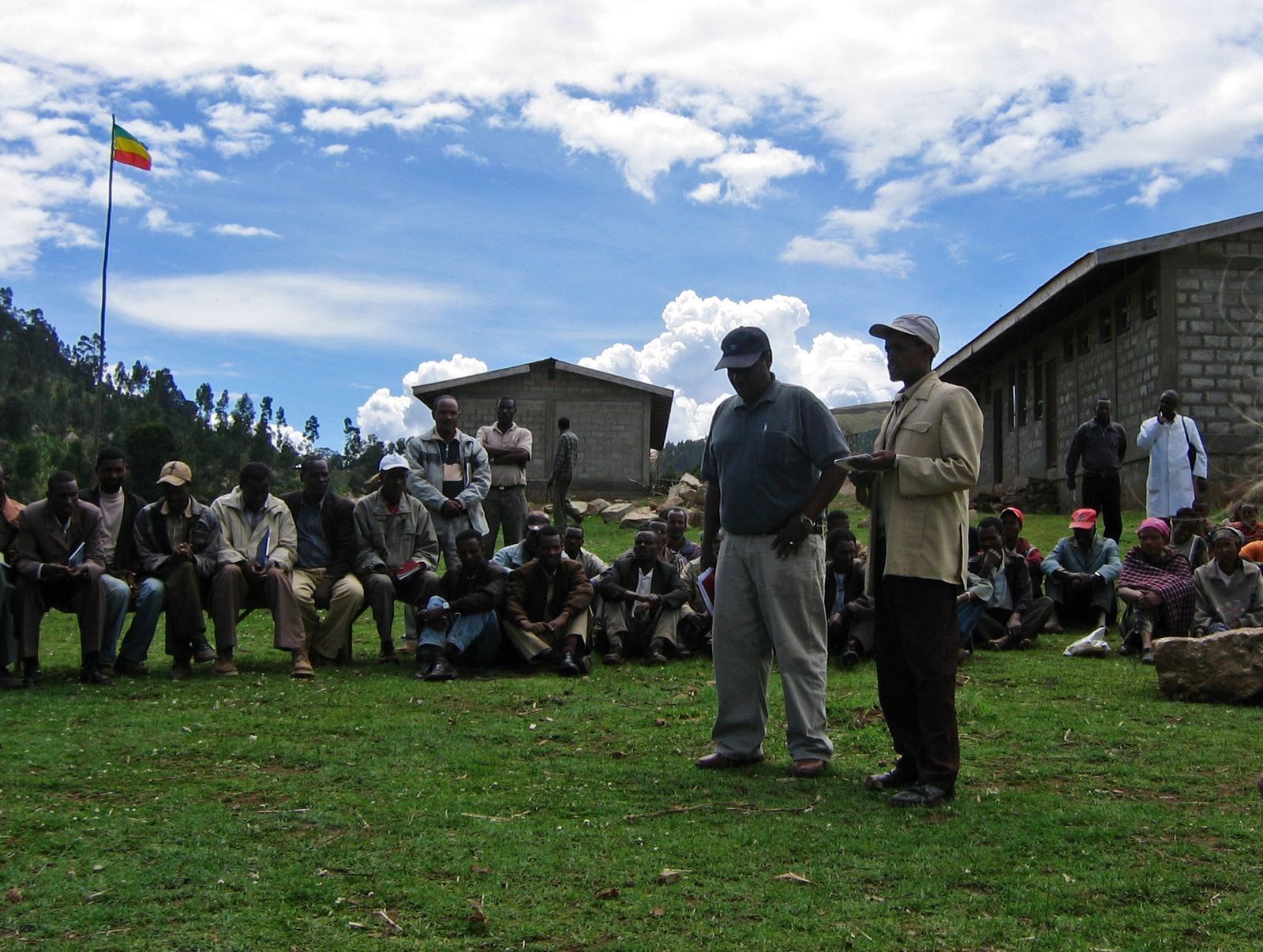
TB notification and prevalence survey data were harmonised and analysed for spatial clustering, and Bayesian spatial models estimated area-level risk. A transmission model compared targeted and uniform case finding. Preliminary maps were reviewed with the National TB Programme and regional teams, and their feedback shaped the final scenarios.
What we delivered
Hotspot and risk maps, a documented modelling framework, and a manuscript and policy brief in preparation.
Outcomes
TB cases were clustered, with hotspot zones that appeared across different methods. Some districts had relative risks well above the national average after adjusting for population density and access to care. Targeted case finding detected more cases per unit of screening effort than uniform deployment.
More in Digital health, AI & innovation.
 Ongoing
Digital health, AI & innovation
Mapping tuberculosis hotspots to target case finding
Tuberculosis is concentrated in geographic hotspots, but most active case finding in Ethiopia is not aimed at them. This project maps TB risk at kebele level…
February 2026 – January 2027 Read more Ongoing
Digital health, AI & innovation
A machine learning forecast for dengue outbreaks
Dengue outbreaks in Ethiopia have become more frequent, and the health system has no tool to predict when and where they will occur. This project builds…
February 2026 – January 2027 Read more Ongoing
Digital health, AI & innovation
Mapping cholera hotspots in high-burden districts
Cholera surveillance data in Ethiopia are usually reported at regional or zonal level, which hides where outbreaks concentrate. This project analyses line-listed case data to find…
February 2026 – January 2027 Read moreWork with us.
We take enquiries from governments, development partners, research institutions and implementers on research, advisory and training engagements.