Investment Case for Ethiopia’s Vaccine Ecosystem: ACHIEVE Africa 2.0
With the International Vaccine Institute, a comprehensive economic and return-on-investment analysis building the investment case for strengthening Ethiopia's vaccine ecosystem, from clinical evaluation to regulatory systems and pharmacovigilance.
Challenge
African vaccine manufacturing investment is accelerating towards the continental ambition of producing 60 per cent of the continent's vaccines in Africa by 2040. Manufacturing capacity only delivers value if the evidence ecosystem around it exists. The binding constraint sits between discovery and sustained use: the institutional capacity to generate regulatory-grade evidence, run compliant clinical evaluation, complete credible registration and sustain post-introduction safety monitoring. Disclosed vaccine financing for Africa is heavily concentrated in manufacturing and technology transfer, while discovery, clinical trials and registration each attract a small fraction of it.
Approach
A discounted cash-flow appraisal paired with a narrative assessment of Ethiopia's institutional landscape across research, regulatory and public health institutions, mapped against the capability areas the programme would support. Fiscal value is modelled through four explicit channels: emergency procurement premiums avoided, shorter surge response operations, reduced rework in regulated functions, and lower expected cost of corrective action from stronger pharmacovigilance and post-introduction evaluation. The model runs over a ten-year horizon with a phased ramp-up and three scenarios, and is built to be re-run and stress-tested by Ministry of Finance counterparts rather than presented as a settled figure.
Progress
An investment case setting out the strategic rationale, a capability landscape mapping Ethiopia's institutional anchors and constraints across seven capability areas, and the economic and fiscal argument. A companion model workbook with transparent, editable assumptions, scenario and sensitivity analysis, structured so that counterparts can interrogate the inputs rather than accept the outputs.
More in Health financing & governance.
 Ongoing
Health financing & governance · Cordaid
Healthcare Quality in PBF vs Non-PBF Facilities
A comprehensive, multicentre, mixed-methods evaluation comparing the quality of care in Performance-Based Financing (PBF) and non-PBF facilities in Ethiopia, examining whether tying facility financing to verified…
February 2026 – present Read more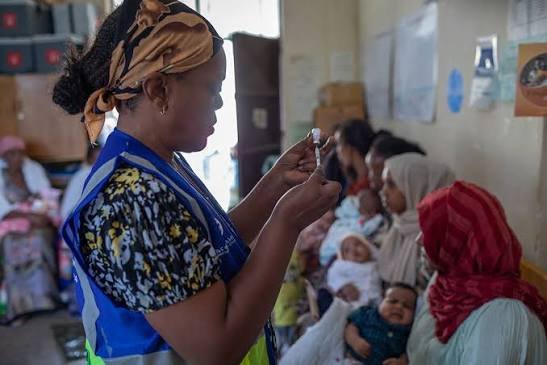 Ongoing
Health financing & governance · Amref Health Africa
Provider payment assessment for primary health care
A three-region field assessment of how Ethiopia's existing provider payment mechanisms function in practice, adapting an international assessment framework to the Ethiopian context to inform the…
December 2025 – June 2026 Read more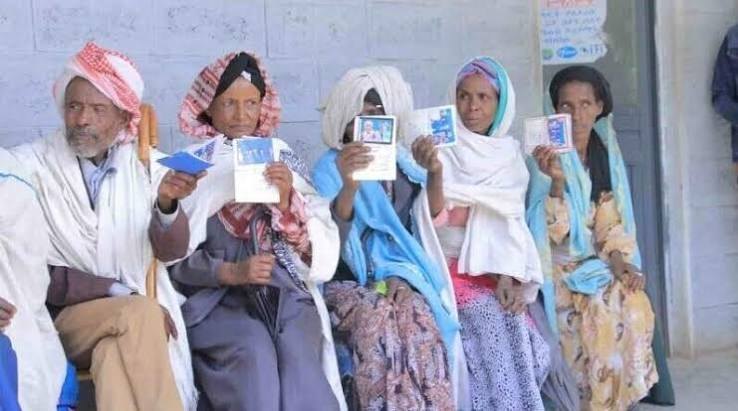 Ongoing
Health financing & governance · Alliance for HPSR
Blended Provider Payment for Primary Health Care
A nationwide mixed-methods evaluation of blended provider-payment models for Ethiopia's primary health care reform, assessing how payment design shapes efficiency, provider behaviour, and access.
July 2025 – present Read moreWork with us.
We take enquiries from governments, development partners, research institutions and implementers on research, advisory and training engagements.